
Youth Empowerment Programs Near Me and Their Cost
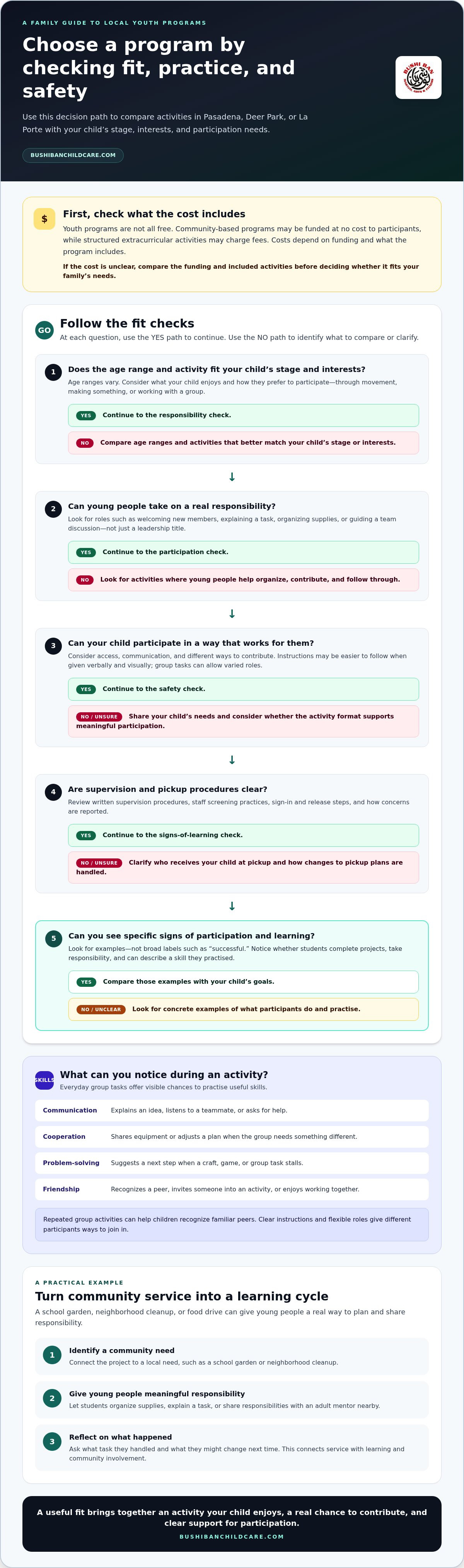
Youth empowerment programs near me in Pasadena, Deer Park, and La Porte aren’t all free. Community-based programs may be funded at no cost to participants, while structured extracurricular activities may charge fees. Costs depend on funding and what the program includes. Age ranges also vary, so consider your child’s stage and interests when choosing.
It’s reasonable to look for a program that supports your child’s growth without adding an unexpected expense. This guide explains what no-cost options may look like, what can affect fees, and how programs differ by age and activity. You’ll also learn how young people can practise useful skills, take on leadership, build friendships, and contribute to their community.
From service projects to fitness and after-school activities, programs offer different ways to build confidence and connection. Here’s what to look for, how program costs are shaped, and how to find an option that fits your family’s needs in Pasadena, Deer Park, or La Porte.
Table of Contents
Community service and student leadership
Community service gives young people a practical way to turn leadership into action. In Pasadena, Deer Park, or La Porte, a school garden, neighborhood cleanup, or food drive can help students plan a task and share responsibilities. Choose a project connected to a local need, then give young people a meaningful role in organizing and completing it.
Leadership grows through responsibility, not just a title. A student might welcome new members, explain a task, organize supplies, or guide a team discussion. These roles build communication, decision-making, and follow-through. For example, a young person can prepare activity materials and explain the steps to other participants with an adult mentor nearby.
Service can also build connection around a shared, constructive goal. Young people might prepare care packages with a community group or create a school welcome activity for new students. Projects like these give participants a reason to work together and contribute. They can support connection and reflection, but they don’t replace counseling or specialized care.
Which programs have the best reviews or outcomes? No single program is the best fit for every young person. Look for specific signs of participation, such as students completing projects, taking responsibility, and describing a skill they practised. Compare those examples with your child’s goals instead of relying on a broad label such as “successful.”
What safety policies and background checks do local programs use? Review written supervision procedures, staff screening practices, sign-in and release steps, and how concerns are reported. For example, find out who receives a child at pickup and how changes to pickup plans are handled. Clear procedures help families understand how a program manages supervision and communication.
Are programs available for youth with disabilities or specific support needs? A suitable activity accounts for a young person’s access, communication, and participation needs. Instructions, for example, may be easier to follow when given verbally and visually, while a group task can allow different ways to contribute. Share your child’s needs during enrollment and consider whether the activity’s format supports meaningful participation.
Use a simple process: identify a community need, give young people a real responsibility, and reflect afterward. After a service activity in La Porte, for instance, students could name one task they handled and one change they’d make next time. That conversation connects service with learning and gives young people a clear next step in their community involvement.
Building real-life skills and friendships
A youth program can make everyday skills visible through ordinary group activities. Planning a shared art project, for example, asks young people to choose materials, divide tasks, and resolve small disagreements. Each step offers practice in communication, cooperation, and follow-through. These skills matter beyond the activity because children use them at school, at home, and with peers.
Friendships often begin with a shared purpose rather than a forced introduction. A cooking activity gives participants a reason to share tasks, compare ideas, and celebrate what they made together. A team challenge can help a quieter child contribute by drawing a plan or gathering supplies. Look for activities that make room for different strengths, not just the loudest voices.
To see whether an activity is helping your child practise useful skills, notice what they do during and after it:
Communication: Can they explain an idea, listen to a teammate, or ask for help?
Cooperation: Do they share equipment or adjust a plan when a group needs something different?
Problem-solving: Can they suggest a next step when a craft, game, or group task stalls?
Friendship: Do they recognize a peer, invite someone into an activity, or enjoy working together?
These examples are more useful than expecting one activity to change everything. After a session, ask your child to describe one moment they enjoyed and one challenge they handled. If they mention taking turns during a game or inviting a new peer to join, you have a specific way to discuss social confidence. Keep the conversation open, without turning it into a test.
Program structure can also shape how easily friendships form. Repeated group activities help children recognize familiar peers and build comfort through shared routines. Clear instructions make it easier to join in, while flexible roles give participants different ways to contribute. A child, for example, may prefer organizing materials before speaking in front of the group.
When considering youth empowerment programs near me, match the activity to your child’s interests and preferred way of participating. A child who enjoys movement may connect through a team game, while an imaginative child may prefer making up a story or building something together. Look for a setting where children can collaborate, practise skills, and connect naturally.
For a more structured setting where movement and personal growth come together, explore after-school activities that encourage skill-building. A useful next step is to talk with your child about which group activities feel enjoyable, challenging, and welcoming.
Life skills and leadership training
Leadership training works best when young people practise responsibility in real activities. A student, for example, can explain a game, demonstrate a movement, or help a group follow instructions. These roles develop clear communication, preparation, and respectful decision-making. They also give mentors a chance to guide young people through challenges as they happen.
Useful life skills are specific and observable. A participant might practise listening by repeating a teammate’s idea before responding. They can build readiness by preparing supplies before an activity begins. A group task can teach flexibility when plans change. These practical moments help young people see what leadership looks like in action.
Responsibility can grow gradually, with guidance at each step:
Observe: Watch a mentor demonstrate an activity and explain its purpose.
Assist: Help arrange materials or welcome participants into the group.
Lead: Explain a familiar task while a mentor remains available to support.
Reflect: Identify what went well and choose one skill to practise next.
This progression lets a young person build confidence without being expected to lead before they feel ready. A child who hesitates to speak publicly, for instance, might start by organizing equipment. Later, they could demonstrate one step to a small group. A mentor can adjust responsibilities to the student’s comfort and participation.
Strong leadership also includes accountability. If a student forgets a task, a mentor can help them work out what happened and plan for next time. If a group activity becomes confusing, the student can pause, listen, and restate the instructions. These responses teach calm problem-solving instead of treating mistakes as failure.
To see whether training is useful, look for examples from everyday activities. Can your child explain a task, ask for help, or accept feedback? Do they follow through on a responsibility, such as returning shared supplies? Specific examples give families a clearer picture than broad labels like “confident” or “responsible.”
Leadership can take quiet forms, too. A young person may notice a teammate needs help, make room for someone’s idea, or encourage the group to try again. These actions show consideration and initiative. They matter alongside public speaking because effective teams need people who listen, support others, and complete practical tasks.
After an activity, ask your child to describe one choice they made and what they learned. For example, “How did you help the group stay organized?” invites reflection without pressure. Over time, conversations like this help children connect practice with readiness for new responsibilities at school and in their community.
Youth ages served
Age ranges vary because youth programs are designed for different stages, needs, and activities. A younger child may benefit from guided play and clear routines, while an older teen may prefer more independence or career exploration. For families in Pasadena, Deer Park, and La Porte, compare the program’s stated age range with its actual activities. Age alone doesn’t determine whether it’s a good fit.
A program’s purpose can shape who it serves. A community activity might welcome a broad mix of young people, while a leadership group may expect participants to take on specific responsibilities. A new participant, for example, could start by assisting with a group task, while a more experienced teen helps explain instructions or organize materials.
Look closely at what participation involves. A younger student might need adult guidance to follow a multi-step activity, while an older participant may be ready to plan a project or help peers. The age range is a starting point, but the activity’s pace, structure, and level of independence help clarify whether it suits your child.
For families in Pasadena, Deer Park, and La Porte, use age information as an initial filter. Then compare the activity format with your child’s interests and comfort. A school-age child may enjoy a structured activity with adult guidance. An older teenager might value a chance to make decisions, practise practical responsibilities, or explore career interests.
Before choosing, work through these steps:
Match the stated ages: Check whether your child falls within the program’s published range.
Review the activity: Compare its responsibilities with your child’s current abilities and interests.
Consider progression: Look for ways participants can take on different roles as their skills develop.
Include your child: Discuss whether they prefer hands-on activities, peer interaction, or career-focused learning.
Age alone doesn’t show whether a young person will feel included. Two teenagers may differ in communication style, experience, and support needs. A clear activity description helps families understand what participants actually do, such as practising a task, working with peers, or taking responsibility for part of a project.
For teens thinking about adult responsibilities, consider whether an activity offers a chance to practise planning, communication, or decision-making. These experiences can help them explore interests relevant to future study or a career. Not every youth program offers formal career training, so focus on the skills its activities actively involve.
Choose based on three details: the eligible age range, the activity’s demands, and the young person’s goals. A child seeking social connection may prefer a group activity, while a teen interested in more responsibility may value a leadership role. Matching these details makes age a practical starting point, not the only measure of fit.
What locations, schedules, and transportation options are available?
For families in Pasadena, Deer Park, and La Porte, location affects whether a program fits the school-day routine. Compare the activity site with your child’s school, home, and regular pickup point. A nearby location may simplify transitions, while a farther site may require a different pickup plan. Check the route at the time your child would travel, not only during a quiet part of the day.
Schedules need the same practical review. Write down the school dismissal time, the program’s start and finish, and the adult responsible for each transition. If a child leaves school before an activity begins, for example, identify where they wait and who supervises that period. Also note how the plan changes on early-release days, school holidays, or when a caregiver’s work schedule shifts.
Transportation arrangements vary by family and location. Common options include caregiver pickup, an agreed carpool, walking with a responsible adult, or public transit where a suitable route exists. Each depends on distance, route, timing, and the child’s ability to travel safely. For a carpool, agree on the pickup point, handoff adult, and backup plan before the first day.
Local community initiatives and neighborhood youth programs often serve specific zip codes or municipal zones rather than an entire state. That localized coverage illustrates how a program’s reach can differ from a broad statewide organization. For families in southeast Texas, check geography by identifying the specific community served and the location where activities actually take place.
Use this quick planning sequence to compare logistics:
Mark the route: Compare home, school, activity site, and pickup location on one map.
Build the timeline: Record dismissal, travel, activity, and pickup windows.
Choose transport: Match the route and timing to a reliable adult or suitable travel option.
Plan changes: Set a backup for schedule conflicts, weather, or a missed pickup.
Keep the plan visible. A shared calendar can list the activity location, pickup person, and any schedule changes. If your child travels between school and an activity, review the route together and explain who to approach if the plan changes. Clear handoffs help reduce confusion for children and caregivers.
Families comparing youth empowerment programs near me can weigh travel time alongside the activity itself. A program with a workable schedule is easier to include consistently in family routines. Explore after-school program options with Bushi Ban Child Care and consider how a structured activity could fit your child’s school-day schedule.
Bushi Ban Child Care: After-School Martial Arts Program
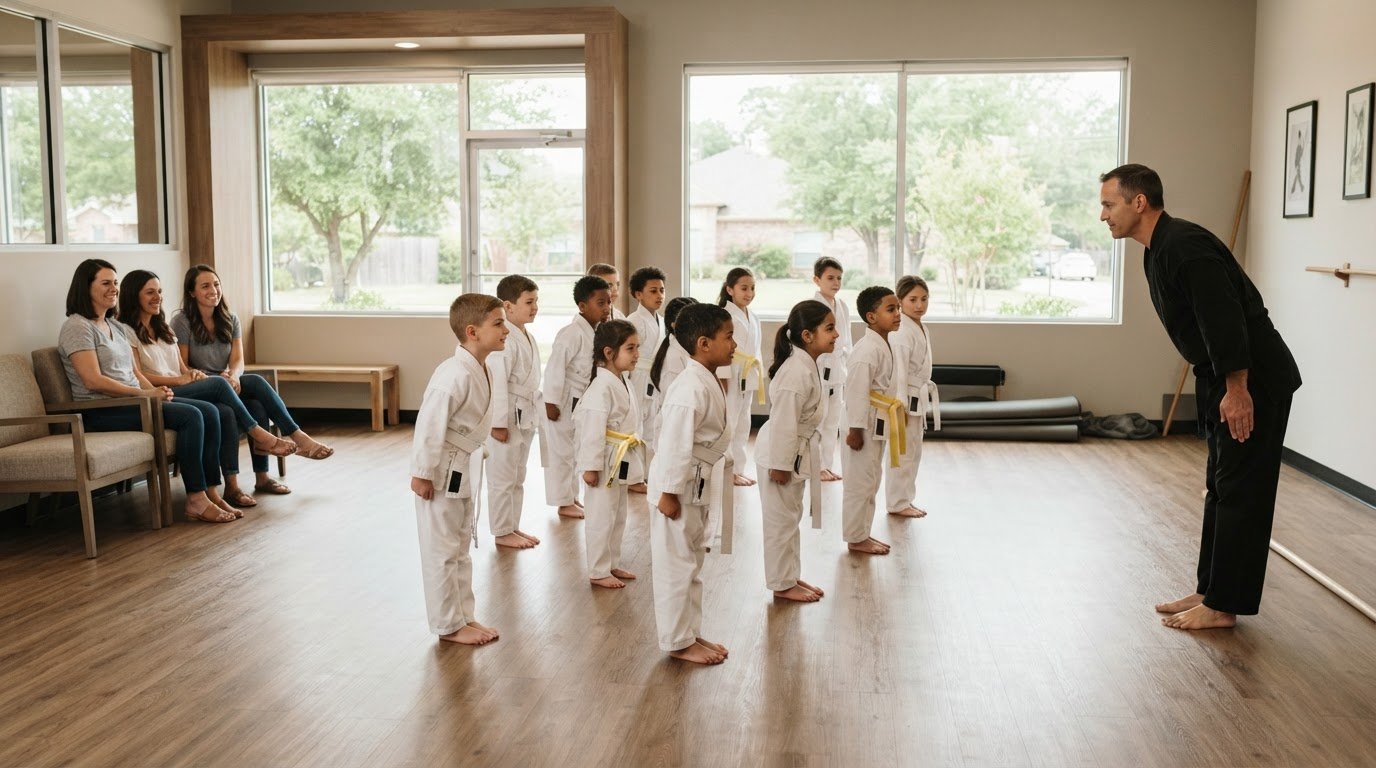
Bushi Ban Child Care offers an After-School Martial Arts Program for families seeking structured activity after school in Pasadena, Deer Park, and La Porte. The program combines martial arts training with playtime, obstacle courses, drills, games, snacks, homework time, and fitness classes. The Student Leadership Program offers another pathway for students ready to practise teaching and leading activities under supervision.
Choose an option based on your child’s interests and the kind of growth you’re seeking. Seasonal and Holiday Camps provide another setting for engaging in activities during school breaks. These offerings connect physical activity with opportunities to practise responsibility and leadership.
If an active, structured program feels like a good fit for your child, contact Bushi Ban Child Care or visit its website to learn more.
Choose a Next Step That Fits Your Family
A useful next step is a conversation with your child. Ask what they’d like to practise, whether that’s moving with confidence, learning a new routine, or taking responsibility in a group. Their answer can help you focus on an activity that feels meaningful, rather than choosing by name alone.
As you explore youth empowerment programs near me, consider whether a structured activity fits your family’s goals. Bushi Ban Child Care offers an After-School Martial Arts Program, Seasonal and Holiday Camps, Martial Arts & Fitness Classes, and a Student Leadership Program. These options give families in Pasadena, Deer Park, and La Porte different ways to consider active participation and personal development.
You don’t need to map out every future goal today. Start with the interest your child has now, then take one practical step toward exploring a suitable program. Contact Bushi Ban Child Care to learn more about its offerings and how they may fit your family’s needs.
A thoughtful choice can begin with one small conversation and become a positive new part of your child’s routine.
Frequently Asked Questions
Are the programs really no cost?
Some programs may have no participation cost when community funding covers expenses, while others charge for instruction or activities. The deciding factors include who funds the program, what it provides, and whether participation requires materials or enrollment fees. For family budgeting, distinguish community services from structured classes and camps. Bushi Ban Child Care offers martial arts programs and camps, so don’t assume those options are free.
How can I get involved?
Start by choosing the kind of participation your child wants, such as physical activity, leadership practice, or community service. If you’re searching for youth empowerment programs near me, write down your child’s interests and use them to guide your search. Then review the program’s enrollment steps and schedule. Help your child prepare questions, plan transportation, or describe what they hope to learn.
What youth programs are available locally?
For families in Pasadena, Deer Park, and La Porte, Bushi Ban Child Care offers an After-School Martial Arts Program, Martial Arts & Fitness Classes, Seasonal and Holiday Camps, and a Student Leadership Program. These structured options suit children interested in martial arts, fitness, or teaching and leading activities. Compare the activities with your child’s interests and your family’s routine to decide what may fit.
Which local youth programs offer mentoring, leadership, or job skills training?
Bushi Ban Child Care’s Student Leadership Program gives students opportunities to develop teaching and activity-leading skills. It supports leadership practice, but it isn’t job placement or formal job-skills training. If a teen’s goal is career preparation, identify the skills they want to practise, such as interview communication or workplace problem-solving. Then look for activities that provide direct practice in those areas.
What ages can participate in local youth programs?
Age eligibility depends on each program, and Bushi Ban Child Care’s offerings are intended for children and youth. Compare your child’s age with the program’s stated range, then consider whether its activities fit their interests and experience. A young beginner, for example, may prefer guided instruction, while an older student may welcome leadership activities that involve taking on responsibilities.
Are there free or low-cost youth programs nearby?
Community-funded activities may have no participation charge, while classes and camps may involve fees. Cost depends on funding and what the activity includes, so compare program types before budgeting. Bushi Ban Child Care offers structured martial arts, fitness, and camp options, but this answer doesn’t quote their prices. Consider the schedule and activity format alongside cost when deciding what suits your family.
What are the eligibility requirements and application deadlines?
Each program sets its own eligibility rules and enrollment timeline. Review its instructions for age criteria, location requirements, forms, and deadlines. Keep those details together and note any materials the application requests. If your child wants to explore a leadership track, include that goal in your planning so you can compare its requirements with the program’s general enrollment process.
How do I enroll in a local youth empowerment program?
Choose an activity, review its enrollment instructions, and complete the required steps. If you’re comparing youth empowerment programs near me, keep the program’s contact details, schedule, and required forms together. Prepare the information requested for the young person and caregiver, then add key dates to your family calendar. To explore Bushi Ban Child Care’s martial arts or leadership offerings in Pasadena, Deer Park, and La Porte, visit its website.


Comments