
Summer Day Camps Near Deer Park for Different Ages
A camp’s age range can matter as much as its activity list. Summer day camps near Deer Park differ in activities, meal and snack arrangements, and the ages or incoming grades they serve. The right fit depends on your child’s interests and stage.
A fun schedule is only part of the decision. You also need to understand the daily routine and whether the program suits your child. Comparing practical details can make your search clearer and help you focus on options that fit your family.
This guide covers camp activities, meals and snacks, age ranges, and incoming grades. You’ll learn which details help you compare programs and picture how a camp day might suit your family.
Table of Contents
Camp activities
For families in Deer Park, Pasadena, and La Porte, activities are only one part of comparing camps. Consider location, the daily experience, and practical requirements together.
Activity Options
Compare the activity schedule with your child’s interests and the equipment each activity requires. Sports, group games, and creative projects call for different clothing and preparation. Deer Park ISD softball campers should not wear metal cleats, and Deer Park Championship Baseball Camp participants should not use steel cleats. These rules apply to those specific sports camps.
Location, reviews, and amenities offer different ways to compare camps. Use the address to assess travel from Deer Park, Pasadena, or La Porte. Reviews can show how families describe activities and facilities, so look for specific details rather than relying on star ratings alone. Registration deadlines and requirements vary by program. Compare its registration period, required forms, eligibility, and equipment instructions.
Scholarships, discounts, and other financial assistance depend on each program’s eligibility rules and application process. Review those terms before planning around assistance. Before-care and after-care are separate schedule features, so the label “day camp” alone doesn’t tell you whether they’re included. Safety policies, staff qualifications, and child-to-staff ratios are also program-specific details to review.
Camp Program Formats
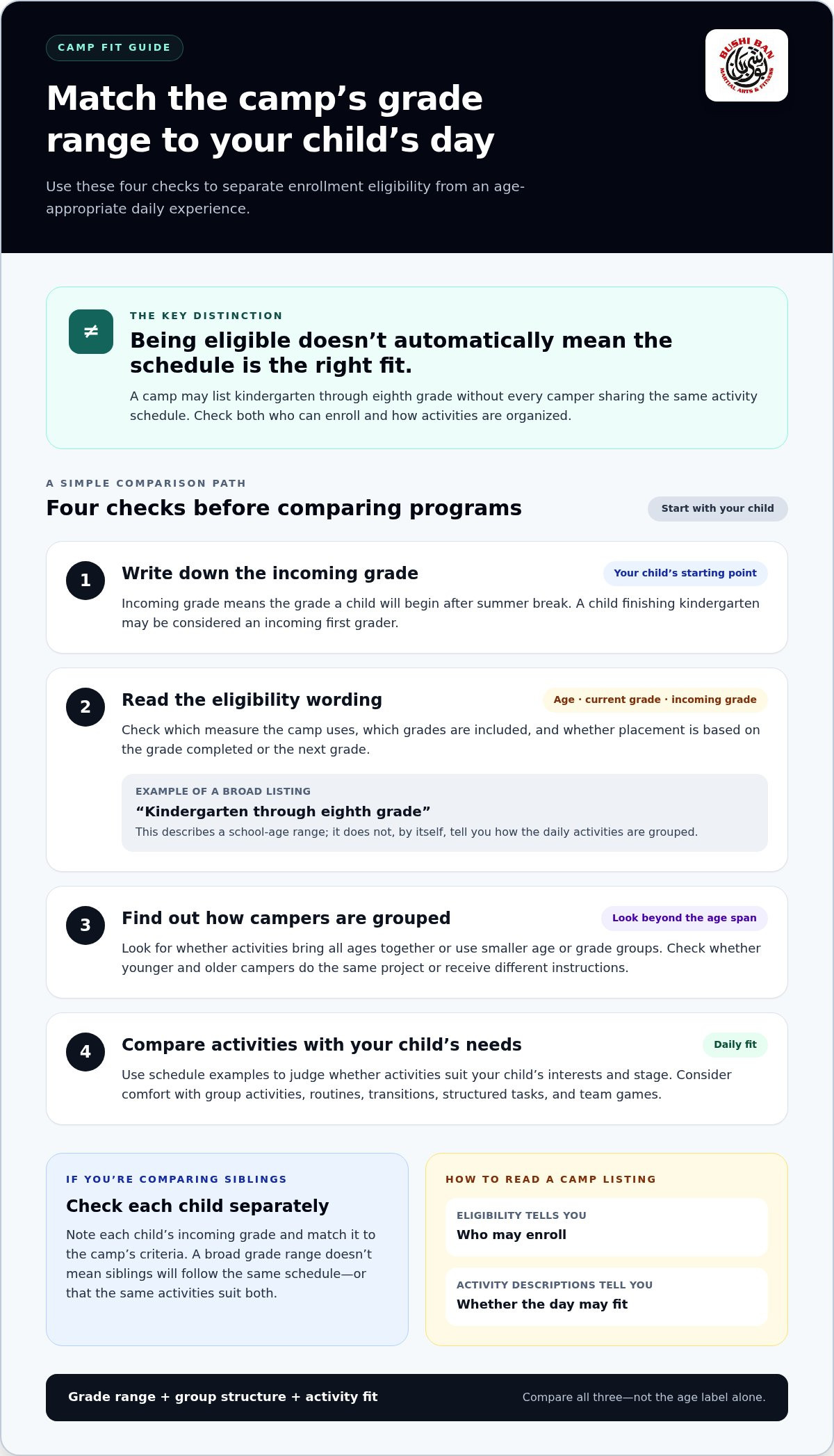
Summer day camps may serve elementary-age children or span kindergarten through eighth grade. A broad grade range doesn’t mean every camper follows the same activity schedule. Read the stated age and grade criteria, then look for activities suited to your child’s stage. Eligibility tells you who may enroll; the schedule helps you judge the daily fit.
Camp participation requirements vary by program and activity. Enrollment may involve providing camper information and choosing a session. Sports may also have equipment requirements, as the Deer Park softball and baseball cleat rules show. Follow each program’s instructions rather than assuming the same requirements apply to every camp.
For an elementary-age child, compare the activities and group format, not just the camp’s name. Consider whether the schedule includes things your child enjoys, such as team play or creative tasks. Families exploring programs in Deer Park, Pasadena, or La Porte can also weigh travel alongside activity fit. These details make local options easier to compare with your family’s routine.
Age groups and incoming grade levels
Camp eligibility may depend on a child’s age, current grade, or incoming grade. A listing for “kindergarten through eighth grade” describes a broad school-age range, not necessarily one shared activity group. Before comparing programs, identify the grade your child will enter after summer. Then match it to the camp’s stated eligibility and activity groupings.
Incoming grade usually means the grade a child will begin after summer break. For example, a child finishing kindergarten may be considered an incoming first grader. This distinction matters when a camp bases eligibility on the next school year rather than the grade just completed. Follow the camp’s exact wording so you don’t compare different eligibility systems as if they were the same.
Check these details in each camp’s age or grade description:
Whether eligibility uses age, current grade, or incoming grade.
Which grades are included, such as kindergarten through eighth grade.
Whether the activity schedule is described for all grades or particular school-age groups.
Whether a camper’s completed grade or next grade determines placement.
These details help distinguish a broad enrollment range from an age-appropriate daily experience. A camp may list kindergarten through eighth grade while still grouping activities by grade band or developmental stage. Look for examples in the schedule: a project requiring sustained reading may suit older elementary students differently from a simple group game. The listed grade range tells you who may qualify; activity descriptions help you judge fit.
For siblings, compare each child’s eligibility separately. A child entering kindergarten and another entering middle school may both fall within a broad grade range, but that doesn’t mean they’ll follow the same schedule. Note each child’s incoming grade, then check whether the activities suit both. This can clarify whether one program works for your family or whether different formats better match each child.
School-year learning needs can also shape your decision. A child moving into a new grade may benefit from a camp day that balances active group participation with focused activities. Consider how your child responds to structured tasks, team games, and transitions. For example, a camper who enjoys collaboration may prefer shared challenges, while another may value more movement. Use the stated grade range and activity examples together rather than relying on an age label alone.
Camper age range
A camp’s eligible age range is only one part of choosing a good fit. The same broad listing can describe very different daily needs for a child entering kindergarten and one entering eighth grade. Compare the age or grade requirement with your child’s comfort in group activities, ability to follow routines, and interest in the schedule. These details make the age label more useful.
Find out how the camp organizes participants within its stated range. A program spanning kindergarten through eighth grade may serve children at several developmental stages. Some activities may bring everyone together, while others may suit smaller age or grade groups. Look for examples in the schedule, such as whether younger and older campers do the same project or receive different instructions.
Use this simple comparison before choosing:
Write down your child’s age and incoming school grade.
Match both details to the camp’s eligibility wording.
Review activities for examples that fit your child’s interests.
Consider whether your child enjoys mixed-age groups or familiar peers.
Friends can make a new camp setting feel familiar, but enrolling together shouldn’t be the only deciding factor. Two friends may qualify for the same program yet prefer different activities or group styles. Ask your child what they hope to do, then compare those interests with the actual schedule. A favorite activity can give a child an easy way to connect with new peers.
Think about readiness through everyday examples, not age alone. Can your child move between activities, join a group game, or ask an adult for help? A camper entering kindergarten may need clearer transitions than an older child entering middle school. These are planning considerations, not pass-or-fail tests. They help you identify which routines may feel comfortable and where your child may welcome support.
Assess each sibling separately. A younger child may enjoy guided group projects, while an older sibling may want more choice or challenge. If a program spans kindergarten through eighth grade, check how its activities address that range instead of assuming one format suits everyone. A brief conversation with each child can reveal different expectations before enrollment.
Finally, compare the camp’s requirements with your family’s summer plans. If your child’s grade changes after summer, use the incoming grade wherever the camp requests it. Keep the relevant grade, age, and activity preferences together when reviewing options near Deer Park. This three-part check helps narrow the field without treating every camp’s age range as interchangeable.
What are the dates and hours for summer day camps near Deer Park?
Camp dates and daily hours vary by program and session. For Deer Park families, compare the session calendar with school-break plans, work schedules, and transportation needs. The first and last days show the overall span; daily opening and pickup times determine whether each day fits.
Start with the calendar. Note which weeks the program runs, whether enrollment covers a full session or selected days, and whether sessions have separate start dates. Compare those dates with family commitments. For example, a session that overlaps a planned trip may be less practical than another, even if its activities appeal to your child.
Review daily hours separately. Record the arrival time, activity start, dismissal time, and pickup window. These details can affect a parent’s commute. A camp that begins after your workday starts may require a different morning plan from one with an earlier arrival option. Compare the posted schedule with your regular weekday timetable.
Before-care and after-care are separate schedule considerations. Don’t assume a camp’s activity hours cover the full workday. Compare the core schedule with any stated care options, and note when drop-off and pickup are allowed. If the schedule gives a pickup window, use it to plan transportation rather than relying only on the camp’s end time.
Use this short planning sequence:
Choose the summer weeks your child can attend.
Compare those weeks with each session’s calendar dates.
Match arrival and dismissal times to your weekday routine.
Include travel time between Deer Park and the camp location.
Coordinate sibling schedules if their sessions differ.
For camps in different locations, travel can change the practical start and finish of your day. A schedule that looks workable on paper may require an earlier departure if the route is longer. Factor in the drive before arrival, then consider pickup traffic and your child’s transition home. This route check makes the hours easier to assess.
Registration timing also affects which dates you can choose. Programs may use session enrollment, limited places, or separate registration windows. Read the enrollment calendar alongside the camp calendar, and note any steps to complete before the session begins. Keeping both timelines together helps distinguish registration dates from actual camp dates.
Build a comparison table for each program: session dates, daily hours, care periods, location, and travel time. For example, compare the morning schedule with your work start, then check dismissal against pickup responsibilities. This practical view helps Deer Park families choose dates and hours that fit the whole summer routine.
How much do summer day camps near Deer Park cost?
Camp costs vary by session length, attendance schedule, and included activities. A shorter session may cost differently from one covering several weeks. Compare the same enrollment period across your options. That makes listed prices more useful than comparing different camp formats at a glance.
For a particular program, the price may depend on the selected session, attendance pattern, included meals, care hours, and activity needs. The amount is provided after a quote request. For example, a family choosing extra care or several weeks may have different costs from one choosing core camp hours for a shorter period.
Look beyond the base enrollment amount. Separate each cost element before comparing programs, including:
Session dates and the number of days included.
Before-care or after-care, if selected.
Meals, snacks, or supplies included in enrollment.
Activity-specific equipment or clothing requirements.
Any stated discounts and their eligibility conditions.
These details help you compare what the family receives for the total amount. A camp that includes meals, for instance, differs from one where families provide them. Sports activities may also involve equipment needs that a general activity schedule doesn’t. Record each item separately so your comparison reflects both enrollment and preparation.
Financial assistance and discounts depend on each program’s rules. Review eligibility criteria, application steps, and deadlines together. A discount may be limited to certain sessions or family members. Don’t include assistance in your budget until the applicable terms are clear. For a fair comparison, note the standard cost and any eligible reduction separately.
Attendance choices can also shape the total. Compare full-session enrollment with any partial-session options listed, then match them to the weeks your child can attend. If your schedule includes a family trip, paying for unused days may affect which session works best. The calendar and enrollment format matter as much as the activity list.
Use a simple worksheet for each option near Deer Park. Record session dates, included services, additional needs, discount rules, and the final quoted amount. This can show why two programs with similar schedules have different totals. It also helps you discuss the family budget using specific enrollment details instead of a broad advertised starting figure.
Before enrolling, compare the complete cost with your child’s likely attendance and your household schedule. A shorter session may suit changing summer plans, while a longer one may fit consistent availability. Use the same categories for every camp, and base your decision on the full program rather than one price label.
Local providers like Bushi Ban Child Care often offer flexible enrollment options, sibling discounts, and structured weekly rates that help families manage summer expenses while keeping children active and engaged.
Bushi Ban Child Care: After-School Martial Arts Program
Bushi Ban Child Care offers an After-School Martial Arts Program for families seeking structured activity beyond summer camp. Its Seasonal and Holiday Camps may also suit families looking for activities during school breaks. Martial Arts & Fitness Classes focus on movement, while the Student Leadership Program gives students opportunities to develop teaching and activity-leading skills.
Consider these options if your child would enjoy martial arts, fitness, or building leadership skills alongside other activities. The right fit depends on the experience your family seeks, whether an after-school program, seasonal camp, or regular classes.
To learn more about the programs, visit Bushi Ban Child Care.
Choose a Next Step That Fits Your Child
Use your camp search to notice what your child wants more of. Is it a seasonal experience, regular movement, or a chance to build confidence through practice? That preference can guide what you explore after comparing summer day camps near Deer Park.
Bushi Ban Child Care offers Seasonal and Holiday Camps, Martial Arts & Fitness Classes, and an After-School Martial Arts Program. These are distinct options for families considering structured activities beyond a single summer plan. Think about the routine your child enjoys and whether ongoing classes or a camp format better suit your family’s next season.
A thoughtful choice doesn’t need to solve every part of the year at once. Start with the activity your child is most excited to try, then explore how that program fits your plans. Small, well-matched steps can make new experiences feel rewarding and achievable.
Contact Bushi Ban Child Care to explore an option that fits your child’s interests and your family’s plans. A little planning can open the door to a positive next step.
Frequently Asked Questions
What summer day camps are available near Deer Park?
Families looking for summer day camps near Deer Park can consider Bushi Ban Child Care’s Seasonal and Holiday Camps, which focus on martial arts training. Its Martial Arts & Fitness Classes are another option for children interested in ongoing movement and skill development. For a local family in Deer Park, Pasadena, or La Porte, the useful next step is matching the program type to whether your child wants a camp experience or regular classes.
Which Deer Park summer camps are best for different ages?
The best fit depends on a child’s interests, experience, and comfort with the program format. Bushi Ban Child Care’s Martial Arts & Fitness Classes are tailored to different age groups and skill levels, making those factors useful starting points. Consider whether your child is new to martial arts or ready to build on existing skills, then compare that with the camp’s focus and your child’s preferred way of learning.
What activities and programs do local summer camps offer?
Activities vary by program, and Bushi Ban Child Care offers camps focused on intensive martial arts training. Its classes include self-defense, coordination, and overall fitness. Students interested in added responsibility can explore the Student Leadership Program, where they practice leadership and assist with teaching under instructor supervision. For families in Deer Park, Pasadena, and La Porte, these options offer different ways to combine physical activity with skill-building.
How do summer day camps near Deer Park compare by location, reviews, and amenities?
Use each camp’s address to compare travel from Deer Park, Pasadena, or La Porte. Reviews can show how families describe activities and facilities; look for specific details and compare the amenities each program offers.
What safety policies, staff qualifications, and child-to-staff ratios do local camps have?
Safety policies, staff qualifications, and child-to-staff ratios are specific to each program, so review them when comparing camps. The named Deer Park softball and baseball camps also have cleat restrictions.


Comments