
Summer Camp with Early Drop Off in Deer Park, TX: Costs
Early drop-off is only useful when the camp’s schedule, activities, and age requirements fit your family’s day. For a summer camp with early drop-off in Deer Park, TX, the total cost depends on the program and the hours it covers, so it helps to look beyond the daily schedule alone.
It’s understandable to want a nearby option that gives your child a welcoming, supervised place to spend the day while you manage work and family commitments. This guide explains what to look for in Deer Park camp locations, how early drop-off and supervised activities fit into the schedule, and which program details shape costs and age eligibility. You’ll have a clearer way to compare camp arrangements and decide what suits your child’s summer routine.
Table of Contents
Camp locations
For Deer Park families, location affects more than the morning drive. A nearby camp can fit more smoothly between home, work, and a school-year routine. Start by matching the camp venue to your usual route. Then consider whether early drop-off happens at that same address or another designated entrance. A facility name alone may not identify the correct arrival point. Use the camp’s registration details to distinguish its street address, drop-off entrance, and any separate pickup point.
One named location in the area is Dow Active Complex. Its March Schools Out Camp runs on March 29, 2027, from 7:30 am to 5:30 pm. That schedule shows why the venue and arrival details matter: an early start can affect the trip before a family’s workday begins. Check travel time for the scheduled arrival window, not just the regular commute. Also consider parking, the building entrance, and whether pickup uses the same location.
Build a simple location comparison before choosing. Record the camp name, full street address, early drop-off point, and standard pickup point. Add the drive time from home or work during the hours you expect to travel. If a camp operates at a school, distinguish the school’s main entrance from the specific camp check-in area. These details can prevent confusion on the first morning and help you judge whether the routine works across the full session.
Each camp sets its own cancellation, late-pickup, and attendance policies. Cancellation terms explain whether withdrawal may qualify for a refund or credit, while late-pickup rules describe what happens if you arrive after the scheduled time. Attendance rules cover absences and schedule changes, so read them alongside the location and operating hours.
Before choosing a Deer Park option, consider the morning and afternoon journeys separately. A convenient location should make both arrival and end-of-day pickup workable, not just place the camp near one destination.
Safe, supervised activities led by trained adults
A camp schedule should make adult supervision and activity transitions clear. Review how the program organizes group activities, outdoor time, and trips before comparing daily routines.
Supervision by Trained Adults
Trained adults should guide activities, explain expectations, and monitor children as the group moves between spaces. Look for a clear description of who leads each activity and how children stay with their group during transitions. For example, a schedule that identifies an adult-led art session gives families more context than a list that only says “free time.” Supervision should be considered alongside the activity itself.
Activity Options
Outdoor activities, STEM projects, art, and sports offer different ways to learn and participate. A balanced schedule might pair a hands-on science challenge with a drawing project or a team game. Consider whether the listed choices match your child’s interests and comfort. Clear activity descriptions help you understand what a typical camp day involves, rather than relying on broad labels such as “enrichment.”
Field trips add another kind of activity. Look for a schedule that identifies trip days, destinations, and how those outings fit into the camp day. That context helps families plan for a different routine. Meals matter, too. Review whether the daily plan includes meal or snack breaks, and note any instructions about food that affect your child’s participation.
Swimming and outdoor activities need specific planning. A camp schedule should distinguish pool time from other outdoor play, so families can understand the day’s mix. Consider how weather changes may affect outdoor plans and whether an indoor activity appears as an alternative. For swimming, look for clear information about when it occurs and what participation involves. These details help you compare programs based on activities your child will actually experience.
For a summer routine centered on movement and structured learning, explore martial arts and fitness classes as another activity option.
Affordable summer camps and programs
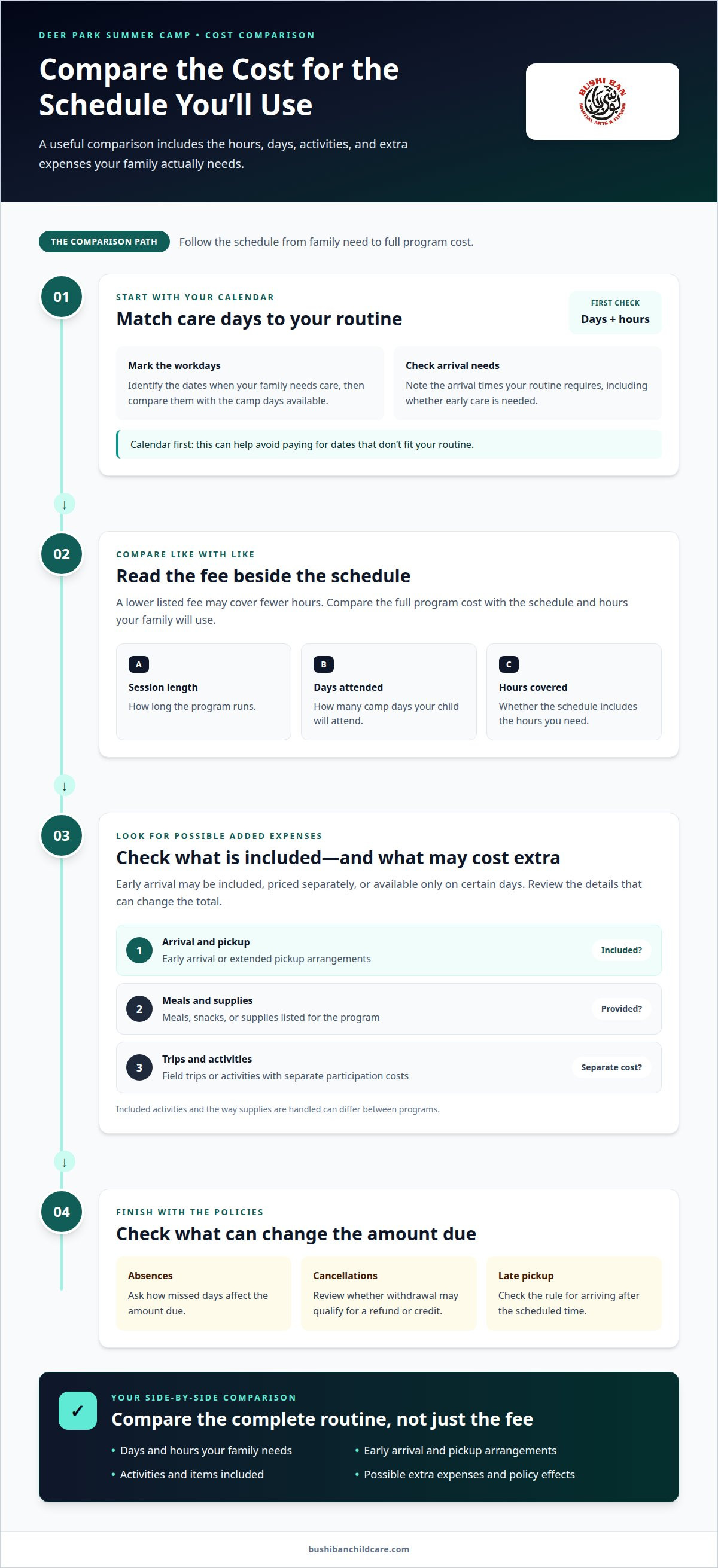
Compare the full program cost, not just its advertised session fee. In Deer Park, two camps can have different schedules, included activities, and arrival options. A lower listed fee may cover fewer hours, while another program may include a longer day. Read the schedule beside the fee so you can see what each option covers. Then compare the costs against the days your family actually needs.
Early drop-off can affect the total, depending on how a camp structures its schedule. Check whether early arrival is included, priced separately, or available only on certain days. For example, a family needing early care every weekday should compare that full routine with a camp offering standard arrival times. The useful comparison is the cost for the schedule you’ll use, not a rate that leaves out required hours.
Use a short checklist to identify possible added expenses:
Session length and number of days your child attends.
Early arrival or extended pickup arrangements.
Meals, snacks, or supplies listed for the program.
Field trips or activities with separate participation costs.
These details help explain why two programs with similar schedules may have different totals. A camp day that includes art materials, for instance, may handle supplies differently from one that asks families to provide them. Likewise, a trip day can change what the program includes. Compare like with like, and note each item that affects your family’s spending.
For a practical budget, match enrollment to your calendar before choosing a session. Mark the workdays that require care, then compare available camp days and arrival times. This can help avoid paying for dates that don’t fit your routine. Ask how absences, cancellations, and late pickup affect the amount due, since these policies can change the final cost. Keep the answers with the schedule and fee details for a clear side-by-side decision.
Affordable means the program fits both your budget and your child’s day. In Deer Park, consider travel, timing, included activities, and extra expenses together. A clear comparison makes it easier to choose a camp that supports your summer routine without overlooking important parts of the total.
Camp age eligibility
Camp eligibility depends on each program’s stated age range and enrollment rules. In Deer Park, compare your child’s age with the camp’s criteria rather than assuming they will qualify based on a later birthday. A program may organize groups by age, grade, or readiness for its activities. These details shape whether a child can join and feel comfortable in the daily routine.
Start with the published eligibility criteria. Look for the minimum and maximum ages, the date used to determine age, and any grade requirements. For example, a camp may use a child’s age on the first day rather than their age later in the session. A grade-based rule can also differ from an age-based one. Review the terms for the specific session you are considering.
Age is only one part of fit. Consider whether your child is interested in the activities and comfortable following group instructions and moving between scheduled activities. A child who enjoys structured games may welcome a group routine, while another may prefer different activities. These examples can help you think about fit without assuming every child develops on the same timeline.
Use this checklist when reviewing a camp’s enrollment information:
Compare the stated age range with your child’s age on the relevant date.
Note any grade, participation, or session-specific requirements.
Match the activity schedule to your child’s interests and comfort.
Review how early arrival fits the group’s start-of-day routine.
For siblings, check eligibility for each child separately. One child may fit the age range while another does not, even if both attend the same school. If a birthday falls near the camp’s cutoff, use the written session rule to guide your decision. Clear criteria make enrollment planning easier and help families choose a routine suited to each child.
Once you’ve identified the age and readiness factors that matter, explore camp options for a structured summer routine.
Bushi Ban Child Care: Seasonal and Holiday Camps
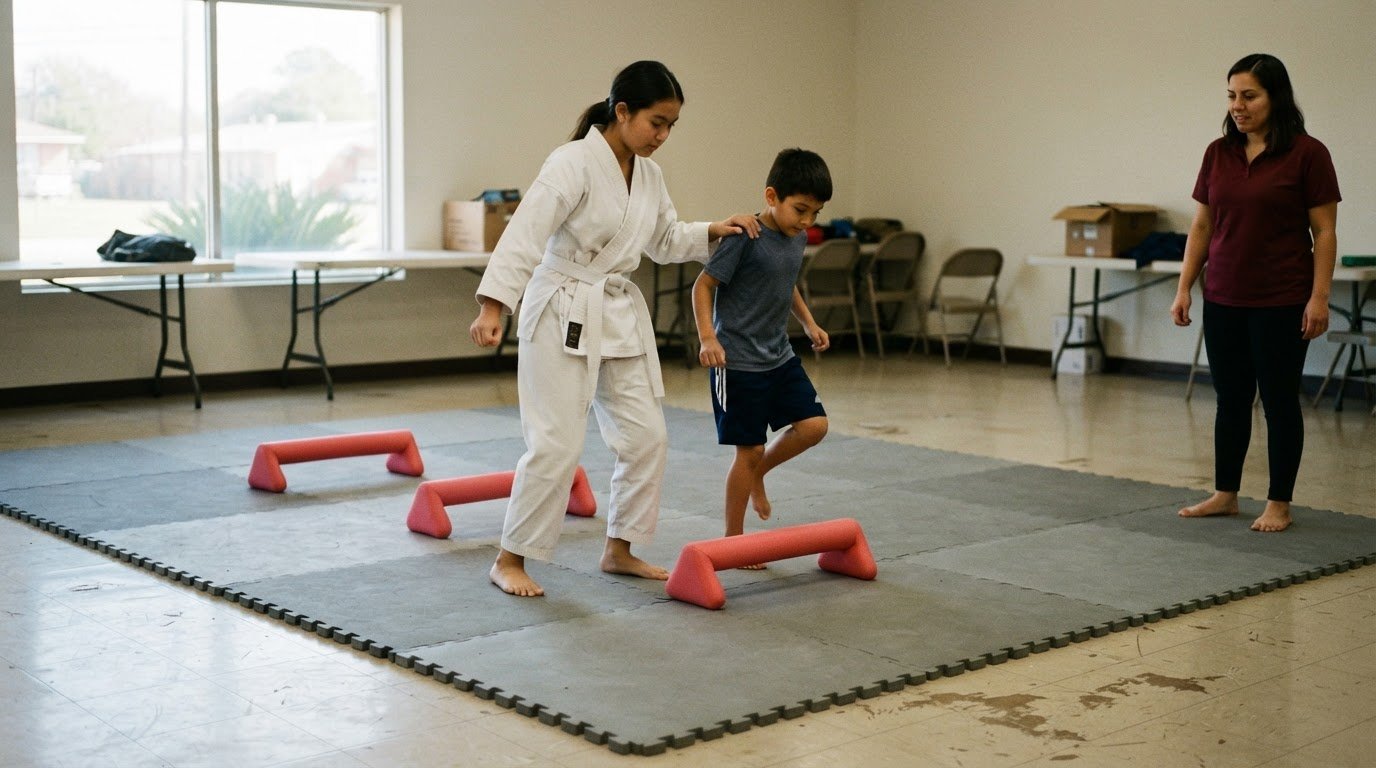
Bushi Ban Child Care offers Seasonal and Holiday Camps for families seeking structured activities during school breaks. The camps focus on martial arts training, giving children an active way to participate and build skills. Martial arts and fitness classes also support movement and discipline, while the Student Leadership Program gives students opportunities to develop activity-leading skills.
Consider these programs when planning around a school holiday or looking for structured enrichment. Match the activities to your child’s interests and your family’s schedule. To discuss Bushi Ban Child Care’s Seasonal and Holiday Camps, contact the team.
Make Your Summer Plan Work for Your Family
A camp choice can shape more than a morning routine. It can give your child a consistent place to practice new skills, build confidence, and stay active through the summer. As you plan, consider which activities your child is excited to try and what kind of routine will help them feel ready each day.
For families considering a summer camp with early drop-off in Deer Park, TX, connect your priorities with a program that supports your child’s growth. Bushi Ban Child Care offers Seasonal and Holiday Camps, an After-School Martial Arts Program, and Martial Arts & Fitness Classes. Each offers a different way for children to stay engaged through structured activities.
Start a conversation about the options that may fit your child and your family’s plans. Contact Bushi Ban Child Care to take the next step toward a purposeful summer.
Frequently Asked Questions
Which summer camps in Deer Park, TX offer early drop-off?
Bushi Ban Child Care offers Seasonal and Holiday Camps for families in Deer Park, while Dow Active Complex lists a March Schools Out Camp. A summer camp with early drop-off in Deer Park, TX should have its arrival time included in the specific session schedule. Use the camp’s location and session details together when deciding whether the program fits your family’s morning routine.
What time does early drop-off start at Deer Park summer camps?
Early arrival times depend on the individual camp schedule. One local example, Dow Active Complex’s March Schools Out Camp, is scheduled from 7:30 am to 5:30 pm on March 29, 2027. That is the listed operating window for that day camp, not a universal summer early-drop-off time. Compare the start time for your chosen session with your family’s morning plans.
What are the early drop-off fees at summer camps in Deer Park, TX?
Early-arrival costs depend on how each session structures its hours and activities. Compare the total for the schedule your child needs, including whether early arrival is part of the program or handled separately. Also consider the session length and included activities. This like-for-like comparison helps you understand the budget implications without comparing a short standard day against a longer schedule.
Which age groups are eligible for early drop-off at Deer Park summer camps?
Eligibility follows each camp session’s age or grade criteria, and the same early-arrival arrangement may not apply to every group. For example, a camp could organize participants by school grade, while another uses age ranges. Match your child’s details to the requirements for the exact session and consider whether its activities suit their interests and readiness. That makes enrollment decisions more straightforward.
What activities and supervision are provided during early drop-off?
Early drop-off should provide an organized, supervised transition into the camp day. The activities during that period may differ from the main schedule, so distinguish arrival time from core programming. Bushi Ban Child Care’s Seasonal and Holiday Camps focus on martial arts training. Look at the session schedule to understand how that program’s activities fit into the day and the early-arrival period.
Do Deer Park summer camps require advance registration for early drop-off?
Registration arrangements depend on the camp and session, so include early arrival in your enrollment planning. A clear schedule helps organizers plan for your child’s attendance and helps your family coordinate arrival days. Keep the session dates, expected arrival time, and your child’s enrollment details together. This makes it easier to follow the program’s stated registration process and prepare for the first morning.


Comments