
Building Discipline Through Martial Arts for Pasadena Kids
A child’s confidence grows when they get to practice, make progress, and see what they can do. Building discipline through martial arts in Pasadena can give kids structured opportunities to strengthen focus, self-control, respect, and faith in their abilities, without making competition the goal.
It’s natural to look for an activity that builds confidence and teaches children to use their strength thoughtfully. An instructor’s martial arts experience matters, as does the ability to guide children with patience, clear expectations, and encouragement. This article explains how training can support a child’s development, what a constructive class looks like, and what to consider when choosing an instructor. You’ll also learn how martial arts can fit into a child’s routine and when an after-school program may be a practical next step.
Table of Contents
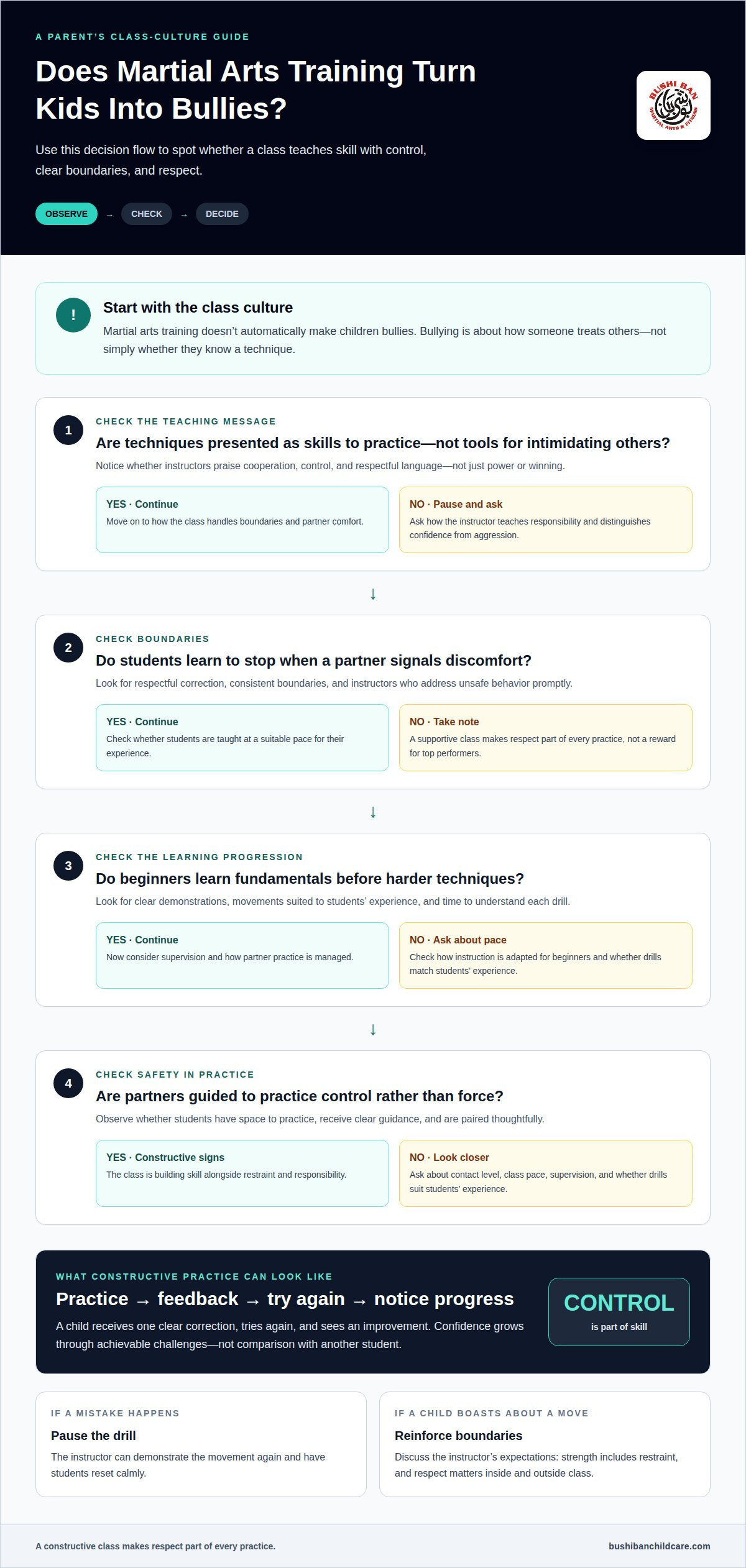
Does Martial Arts Training Ever Turn Kids Into Bullies?
Martial arts training doesn’t automatically make children bullies. Class culture matters: instructors can present techniques as skills to practice, not tools for intimidating others. For example, students learning a controlled block should also learn to stop when a partner signals discomfort. Respectful correction and consistent boundaries help children distinguish confidence from aggression.
For children and adults, martial arts can build discipline through repeated practice: listen to an instruction, perform a movement carefully, then try again after feedback. A beginner might learn to wait for a partner’s turn instead of rushing ahead. This routine makes self-control visible in class and gives students a practical way to build confidence through steady effort.
Bullying is about how someone treats others, not simply whether they know a martial arts technique. Instructors can reinforce this distinction by praising cooperation, control, and respectful language, not just power or winning. If a child makes a mistake during partner practice, the instructor can pause the drill, demonstrate the movement again, and ask students to reset calmly. These moments teach that skill comes with responsibility.
Injury risk varies with factors such as contact level, class pace, supervision, and whether drills suit students’ experience. Instructors can help reduce risk by explaining movements before practice, pairing students thoughtfully, using appropriate protective equipment, and stopping an activity if someone feels pain or discomfort. Parents can observe whether children have space to practice and receive clear guidance.
Look for specific signs of a constructive class: instructors address unsafe behavior promptly, beginners learn fundamentals before harder techniques, and partners practice control rather than force. If a child boasts about using a move to scare someone, reinforce boundaries and discuss the instructor’s expectations. A supportive class makes respect part of every practice, not a reward reserved for top performers.
Confidence grows through achievable challenges. A child struggling with a stance can receive one clear correction, try again, and notice the improvement. That small success supports personal growth without measuring progress against another student. In a well-guided class, children learn that strength includes restraint, progress takes practice, and respect matters inside and outside the training space.
Can martial arts help my child have faith in their abilities?
Yes. A child can build confidence by learning a movement, practicing it, and noticing progress. Mastering a balanced stance or coordinated step gives a beginner a clear example of growing ability. Positive reinforcement works best when instructors praise specific effort, such as listening carefully or trying a technique again, instead of comparing students. Recognizing a small improvement can make the next challenge feel approachable.
Children’s martial arts classes introduce fundamentals gradually. Brazilian Jiu-Jitsu, for example, emphasizes grappling skills and controlled partner practice. A child starting a program can arrive in comfortable activity clothes, listen to the instructor’s directions, and follow demonstrations at their own pace. The first class is a chance to learn the room’s routines and meet the instructor, not to master every move. Familiar steps can make a new setting easier to navigate.
When comparing classes in Pasadena, Texas, consider schedule fit, instructor experience, class size, and any trial terms together. Observe whether students receive clear demonstrations and individual feedback, then consider whether the program’s approach suits your child’s needs. These factors can help you identify a welcoming learning environment rather than one focused mainly on performance.
For children with ADHD, anxiety, or other learning needs, predictable routines, concise instructions, and patient encouragement may make classes easier to approach. Those features don’t mean a program is designed specifically for a diagnosis. A child may need a different pace or support, so notice how instructors respond when a student needs directions repeated or a brief pause.
Confidence can grow beyond children’s classes, too. Teen and adult martial arts classes give older beginners a chance to build coordination and strength through progressive practice. Personal training offers a different format from group classes, with instruction focused on an individual’s goals. For a child who benefits from a consistent routine, an after-school martial arts program can connect structured practice with the school day.
Discipline, focus, self-control, and respect
A structured class turns discipline into actions children can practice. Students line up, listen to the instructor, follow a movement, and wait for a partner before repeating it. Each step calls for attention and self-control. For example, a child who pauses until a partner is ready practices respect as part of physical training. Repeating a sequence also asks students to notice details and adjust their movements carefully.
Self-defense teaching should include ways to avoid violence, not only physical techniques. A useful lesson can distinguish practicing a move with a partner from using force during a disagreement. Children can rehearse a simple response: create distance, use a clear voice, and seek help from a trusted adult. This approach makes restraint part of self-defense. Technique alone doesn’t teach a student when not to engage.
Adults may choose Krav Maga classes for practical self-defense alongside physical training. The same principles can guide families considering building discipline through martial arts in Pasadena: instructors should explain each drill, demonstrate it clearly, and emphasize control during partner practice. Children need movements taught at a suitable pace, with time to understand their purpose. A school’s teaching style matters as much as its techniques.
Kenpo 5.0 is another named style families may encounter while exploring martial arts. Rather than assuming every school teaches it the same way, consider how the instructor connects practice to discipline, safe control, and respectful partnerships. Notice how students learn a technique, receive feedback, and progress from basic movements. These details help show whether the class supports development or focuses mainly on performing moves.
Steady routines make character skills concrete throughout a student’s journey. A child can show focus by watching a demonstration, self-control by waiting for a turn, and respect by helping reset practice equipment. Instructors who recognize these examples give students clear goals beyond physical performance. For families interested in building discipline through martial arts in Pasadena, these everyday habits offer a useful way to understand what a class teaches.
Instructor martial arts experience and credentials
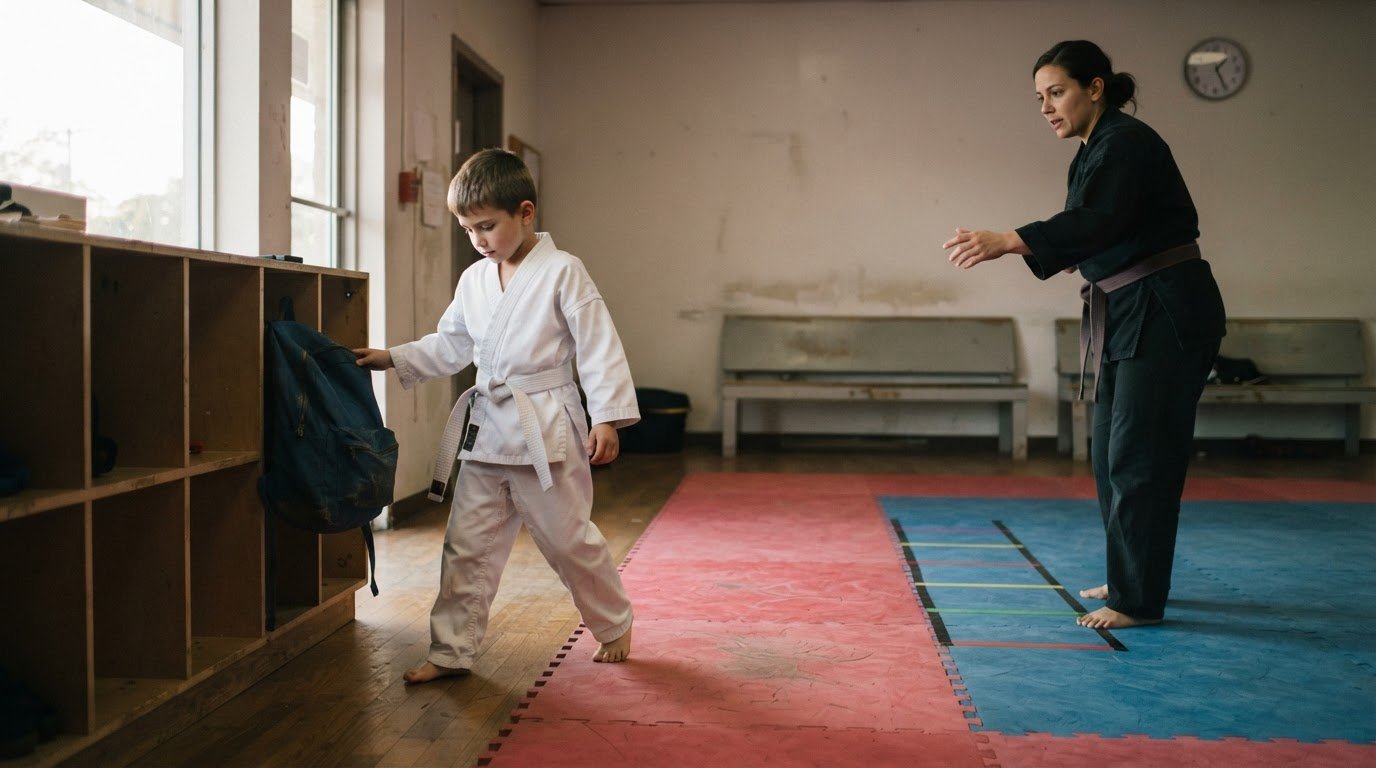
An instructor’s rank can reflect technical learning, but teaching children calls for more than personal skill. In Pasadena, notice how an instructor explains a movement, adapts it for a beginner, and corrects mistakes without discouraging effort. A child struggling with foot placement, for example, should receive a clear demonstration and time to try again. That moment reveals teaching ability alongside martial arts knowledge.
Experience matters when it supports safe, age-appropriate learning. Observe whether instructors explain a drill before students practice it and supervise partner work closely. A well-structured class gives children room to build coordination and fitness while learning to control their movements. Credentials may describe an instructor’s training, but a calm correction during a workout shows how that experience translates into teaching.
Consider the instructor’s approach to personal growth, too. Do students receive specific feedback, such as keeping their balance or listening for the next direction? Does the instructor recognize focus and respectful participation alongside physical progress? These examples show whether children are learning skills and responsibility together. Adults may value technical depth, while children often benefit from concise explanations, repetition, and encouragement suited to their stage of learning.
Credentials are one part of the picture, not a complete measure of class quality. Review an instructor by understanding their martial arts background, observing how lessons are taught, and noticing how students respond to feedback. Look for clear expectations and patient guidance, not a title alone. This helps families judge whether an instructor can make training challenging while keeping the learning environment constructive.
For children ready to develop skills through guided practice, explore children’s martial arts classes as a structured way to combine fitness, learning, and personal growth.
Bushi Ban Child Care
Bushi Ban Child Care offers structured opportunities for children to practice martial arts, fitness, and personal responsibility. Families exploring character-building activities can choose its After-School Martial Arts Program, Martial Arts & Fitness Classes, Seasonal and Holiday Camps, or Student Leadership Program. These programs give children ways to practice focus, discipline, and confidence through guided activities in Pasadena, Deer Park, and La Porte.
The right fit depends on your child’s routine and the kind of learning environment you’re seeking. The After-School Martial Arts Program combines martial arts training with structured after-school care, while camps offer activities during school breaks and holidays. The Student Leadership Program helps students develop teaching and activity-leading skills. Each option connects physical practice with personal growth for families in Pasadena, Deer Park, and La Porte.
If you’re considering a structured activity to support your child’s development, contact Bushi Ban Child Care to discuss your family’s needs.
Choose a Next Step That Fits Your Child
Turn your interest in building discipline through martial arts in Pasadena into an activity that suits your child’s routine and goals. Consider whether they’re ready for regular after-school training, a seasonal camp, or a program that combines movement with character development. Choose a next step your child can approach with curiosity and return to with a sense of progress.
Bushi Ban Child Care offers an After-School Martial Arts Program, Seasonal and Holiday Camps, and Martial Arts & Fitness Classes. These options give families in Pasadena, Deer Park, and La Porte different ways to make guided practice part of a child’s schedule. Consider which format best fits your routine, then discuss your child’s interests and what you hope they’ll gain from participating.
Reach out to Bushi Ban Child Care today to explore a fitting next step. Every new skill begins with the chance to try, learn, and grow.
Frequently Asked Questions
Do I Need To Be Fit For This?
No. A child can begin martial arts without being highly fit. Beginner classes introduce movements at a manageable pace, and regular participation gives students opportunities to build physical skills. A child might first practice a basic step before combining it with another movement. Instructors guide students through the activities, so advanced fitness isn’t a prerequisite for starting.
How Long Until I Get My Black Belt?
There isn’t one timeline that applies to every martial arts style or student. Progress depends on the curriculum, attendance, and the skills a student demonstrates at each level. A black belt is better viewed as a milestone than a deadline. Ask how the school describes progression, what students learn at each stage, and how instructors communicate feedback along the way.
I'm Not Very Sporty Or Coordinated, Will That Be A Problem?
No. Coordination is a skill children can develop through practice, and beginners don’t need prior sports experience. A first movement may feel unfamiliar, then become easier as the student repeats it with instruction. Look for a class where new skills are taught in clear steps and students have time to learn without being rushed. Progress can start with following one direction at a time.
My child hates sports - won’t they hate martial arts too?
Not necessarily. Martial arts may feel different from a team sport because classes can focus on individual skills, following instruction, and working with a partner. A child who dislikes scoring or team competition might prefer practicing a sequence or learning a new movement. Ask your child what they dislike about sports, then consider whether a martial arts class addresses that concern.
What are the age requirements and beginner options at Pasadena martial arts studios?
Age requirements vary by school and class format, so there isn’t one standard age for every Pasadena program. Bushi Ban’s martial arts curriculum is tailored to different age groups and skill levels. For a beginner, useful questions include how students are grouped, what introductory lessons cover, and whether the class pace suits a child’s ability to follow instructions and participate.
What qualifications and background checks should I look for in a martial arts instructor?
Look for martial arts training relevant to the class, experience teaching children, and a clear way to explain safety expectations. Ask what background-check process instructors complete and how the school handles supervision and concerns. A credential alone doesn’t show how someone teaches; notice whether the instructor gives clear directions, treats students respectfully, and responds calmly when a child needs support or clarification.
Comments