
Student Leadership Programs: Building Confident Leaders
What if the most effective way to build your child's confidence isn't through a classroom popularity contest, but through active, hands-on mentorship? Many parents watch their children struggle with shyness, peer pressure, or a lack of focus, wondering where they can truly develop self-belief. That is why purposeful student leadership programs for youth focus on everyday accountability, clear communication, and the responsibility of guiding others. You already know that authentic leadership isn't forged during a single summer weekend; it demands consistent practice within a supportive, disciplined community.
In this guide, you'll discover how structured youth leadership programs cultivate real-world confidence, discipline, and mentorship skills in school-aged children. We'll break down the different program options available today, explore how active peer coaching transforms hesitant kids into capable role models, and examine how year-round training builds habits that last a lifetime. Whether your child is taking their first steps toward self-discipline or ready to mentor younger peers, here is how you can help them lead with purpose.
Table of Contents
What Defines Modern Student Leadership Programs for Youth?
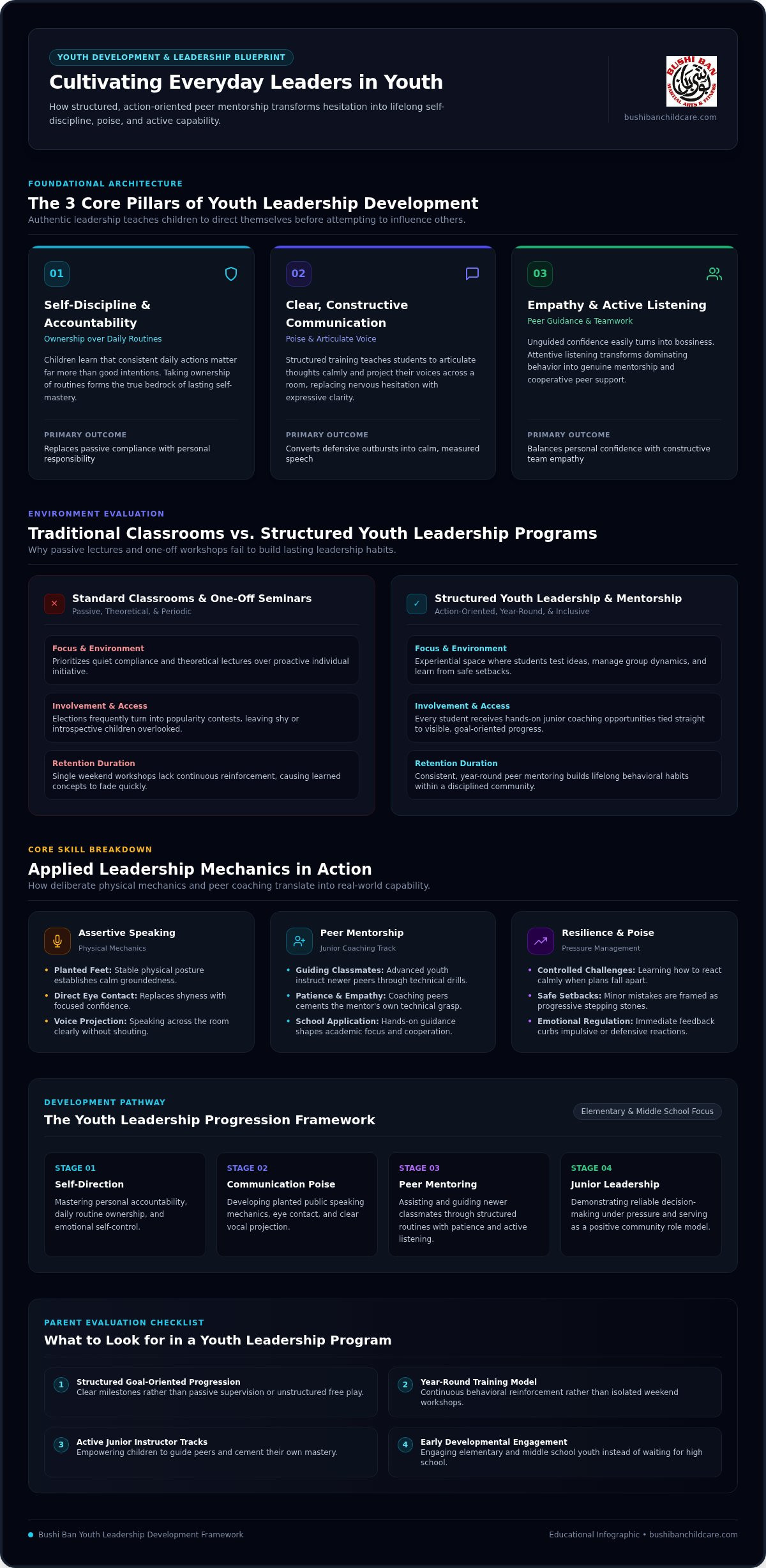
Leadership is not an inherent trait reserved for a select few extroverted teenagers; it is a learned habit. While many conventional offerings focus almost exclusively on high school career readiness, modern student leadership programs for youth introduce essential skills much earlier, engaging elementary and middle school students during critical developmental stages. Rather than sitting through theoretical lectures, young children flourish when they encounter action-oriented challenges that require real decision-making. Grounded in foundational youth development principles, these initiatives blend emotional regulation with personal accountability and peer cooperation. They teach young minds to direct themselves before attempting to influence others.
The Core Pillars of Youth Leadership Development
Authentic leadership begins from within. When programs strip away superficial titles, three vital competencies emerge:
Self-Discipline and Accountability: Children discover that consistent actions matter far more than good intentions. Taking ownership of daily routines and personal effort lays the bedrock of lasting self-mastery.
Clear, Constructive Communication: Structured training teaches students to articulate their thoughts calmly and project their voices with poise, replacing nervous hesitation with expressive clarity.
Empathy and Active Listening: Unguided confidence can easily turn into bossiness. By learning to listen attentively, young leaders transform dominating behavior into genuine peer guidance and supportive teamwork.
Why Traditional Classrooms Often Miss Practical Leadership
Standard academic environments do vital work, yet their daily structure inevitably prioritizes quiet compliance over proactive initiative. In many elementary and middle schools, student council elections turn into popularity contests where outgoing personalities win votes, leaving shy or introspective children overlooked. Most academic schedules simply don't have the room for every child to command a room or lead an initiative.
Genuine capability requires an active space where students can test ideas, manage group dynamics, and experience safe setbacks. Purposeful student leadership programs for youth create experiential environments where minor mistakes become stepping stones. When children learn to pick themselves up, adjust their approach, and support their peers through shared challenges, they cultivate a grounded resilience that textbooks alone cannot provide.
Essential Skills Developed in Youth Leadership Programs
Real-world leadership cannot be absorbed through passive observation. It takes deliberate practice. Quality student leadership programs for youth tie effort straight to visible progress, giving elementary and middle schoolers immediate feedback on how their demeanor influences those around them. Instead of waiting for high school business seminars, younger students learn to master their emotional responses, carry themselves with poise, and resolve conflicts peacefully through structured peer interaction.
Public Speaking and Assertive Communication
Speaking up in front of a group often petrifies young children. Structured leadership training removes this fear early by breaking communication down into repeatable physical mechanics. Students learn to plant their feet, make direct eye contact, and project their voices across a room without shouting. Regular public speaking drills replace defensive outbursts with calm, measured statements, turning natural childhood hesitation into quiet confidence.
Peer Mentorship and Helping Others Succeed
True leadership shines when a child steps up to help someone else conquer a challenge. In an active training setting, advanced youth step into junior coaching roles, guiding newer classmates through technical drills and basic routines. Teaching a younger student requires profound patience and empathy. It also cements the mentor's own technical grasp. Discovering how martial arts for focus and discipline shapes everyday behavior helps parents see how this hands-on guidance translates into better academic concentration and cooperative habits at school.
Resilience, Adaptability, and Decision-Making Under Pressure
How does a child react when a plan falls apart? High-impact student leadership programs for youth place students in controlled, unpredictable situations where they must think on their feet, collaborate, and adapt quickly. Rather than fearing failure, students learn to treat mistakes as objective feedback to improve their next attempt.
Physical literacy plays an enormous role here. Engaging in kids fitness and coordination classes instills physical control that directly reinforces mental grit. When children discover how to steady their breathing and stand tall under pressure, they project genuine executive presence. If you want to see these developmental shifts take root in your child's daily routine, exploring a structured after-school enrichment track offers a proven path toward lasting maturity.
Comparing Leadership Models: Seminars, School Clubs, and Martial Arts Programs
Parents searching for character-building activities generally encounter three distinct models: short-term summer intensives, school-sponsored clubs, and academy-based martial arts tracks. While summer leadership summits ignite enthusiasm, that initial burst often fades once the regular school routine resumes. Long-term maturity isn't built over a single retreat; it requires persistent application. Comparing these different learning environments helps families identify which student leadership programs for youth provide the consistency their children need to thrive.
Academic Clubs and School Governance
School councils and debate teams introduce students to formal governance, committee meetings, and event planning. These activities offer practical exposure to democratic processes and public discussion. However, participation is often restricted to a handful of elected students per grade. Standard club formats also rarely provide systematic instruction on how to coach peers through behavioral or emotional hurdles, leaving less assertive children on the sidelines.
Civic Organizations and Community Volunteering
Youth service groups, scouting troops, and community non-profits instill civic pride and the value of giving back. Through local outreach projects, children discover the joy of contributing to their neighborhoods. Despite these benefits, many civic initiatives operate on monthly or seasonal schedules rather than weekly routines. Their primary focus remains on the community outcome itself, rather than offering individualized, day-to-day coaching on personal leadership skills.
Dojo-Based Mentorship and Student Leadership Tracks
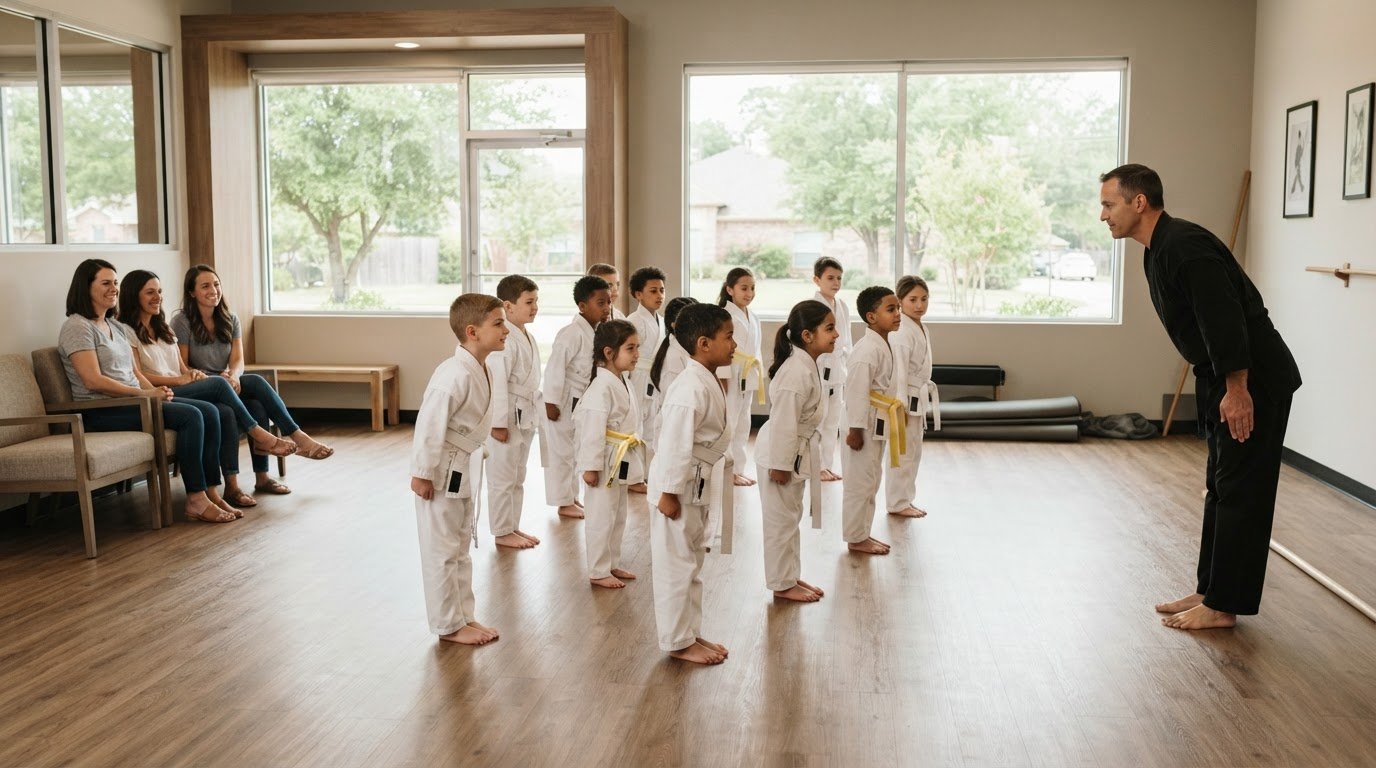
Martial arts academies take a different route by transforming character education into a physical, year-round practice. Within this structure, advancement depends on demonstrable effort, self-control, and humility rather than popularity. Dedicated leadership tracks train advanced students to step forward as assistant instructors, coaching newer peers through fundamental techniques and classroom routines.
This hands-on responsibility bridges the gap between listening to instructions and giving them. By integrating mentorship into active training sessions, student leadership programs for youth in a dojo setting turn abstract virtues into tangible actions. When an older student patiently guides a younger beginner through a challenging drill, leadership ceases to be a theoretical idea and becomes a permanent reflex.
How Parents Can Evaluate and Choose the Right Program
Selecting an enriching environment for your child requires looking past promotional gloss to examine day-to-day operations. Rather than relying on prestige or broad mission statements, families need an objective way to evaluate student leadership programs for youth. A purposeful curriculum balances high expectations with nurturing encouragement, providing the framework young people need to grow into dependable role models.
Use this five-step framework to determine whether a program delivers genuine character development:
Define specific developmental goals: Pinpoint what your child needs most right now, whether that involves overcoming chronic shyness, redirecting impulsive energy, or learning how to focus on multi-step instructions.
Demand structured progression over free play: Ensure the curriculum outlines clear benchmarks for advancement rather than offering passive supervision or chaotic free-for-alls.
Observe staff role modeling: Look for instructors who embody patience, personal discipline, and humility in every interaction.
Look for built-in peer teaching tracks: Check if older students are given active, supervised opportunities to assist and encourage beginners.
Assess weekly schedule alignment: Confirm that the training rhythm fits your family's routine without causing academic burnout.
Assessing Age-Appropriateness and Behavioral Safety
A ten-year-old child processes challenges differently than a teenager. Rigorous student leadership programs for youth calibrate their expectations to fit specific physical and emotional milestones. Safe training grounds enforce clear boundaries, maintain strict supervision ratios, and utilize positive reinforcement systems that reward consistent effort, personal integrity, and respectful behavior toward peers.
Vetting Instructor Credentials and Leadership Pedagogy
Who directs your child's after-school hours matters immensely. Ask potential providers how their staff manages frustration, peer conflict, or momentary failure. Experienced mentors don't use harsh criticism or arbitrary punishment. Instead, they frame setbacks as valuable learning data, stepping in with calm guidance that teaches children how to self-correct with dignity.
Measuring Tangible Growth at Home and School
Authentic progress extends far beyond the studio walls. You should notice positive changes in your child's everyday habits within weeks of joining a structured environment:
Organized morning routines, proactive homework habits, and greater household responsibility.
Better focus in school, paired with a willingness to cooperate with teachers and classmates.
Quiet self-assurance when encountering peer pressure or playground bullying.
When you are ready to give your child this supportive foundation, you can explore local leadership programs designed to cultivate lifelong confidence through proven mentorship.
Cultivating Everyday Leaders: The Bushi Ban Leadership Path
Every child possesses the capacity to inspire those around them, provided they receive the right guidance. Founded circa 1980 by Grandmaster Zulfi Ahmed, Bushi Ban has spent decades serving families across Pasadena, Deer Park, and La Porte, Texas. Rather than treating character education as an occasional theme, the academy embeds accountability into its daily martial arts culture. The dedicated Student Leadership Program challenges advanced students to take charge of their growth by stepping up to instruct, guide, and support their fellow classmates.
Assistant Teaching as a Real-World Leadership Laboratory
Standing in front of a class and directing others is fundamentally different from following an instructor's lead. In the junior assistant-instructor track, young leaders learn how to command attention using calm, composed authority rather than loud volume. They assist head teachers by demonstrating precise techniques, organizing small practice groups, and offering encouragement to students who feel discouraged.
This hands-on role teaches essential life skills in real time:
Clear Public Speaking: Breaking down complex movements into straightforward, easy-to-follow verbal instructions.
Patience and Empathy: Learning to meet beginners at their own level, celebrating their small victories along the way.
The Joy of Service: Experiencing the profound personal satisfaction of watching a junior student earn their next belt through careful coaching.
Reinforcing Leadership in After-School Martial Arts
Consistency transforms temporary motivation into permanent character. Unlike passive babysitting or standard daycare, the Bushi Ban After School Program blends academic homework support, physical fitness, and martial arts training into a balanced afternoon routine. Children learn that true martial arts strength lies in humility, respect, and helping others rise.
During school holidays, Bushi Ban's seasonal and holiday camps maintain this positive momentum, keeping young minds engaged in active mentorship rather than endless screen time. Exploring the Student Leadership Program helps parents see how hands-on coaching and physical discipline work hand in hand. By participating in comprehensive student leadership programs for youth, children develop the inner confidence, self-discipline, and moral compass required to lead throughout their lives.
Equip Your Child to Lead with Purpose and Poise
Authentic leadership isn't about popularity or temporary recognition; it takes root when children embrace personal discipline, articulate their ideas with clarity, and experience the responsibility of mentoring others. By shifting away from passive lectures toward structured student leadership programs for youth, your child develops the emotional resilience and focus needed to navigate life's everyday hurdles with calm self-assurance.
Backed by over 40 years of martial arts and leadership excellence, Bushi Ban provides comprehensive after-school enrichment for families throughout Pasadena, Deer Park, and La Porte. Through dedicated instructor assistant training, young participants discover that true martial arts strength comes from uplifting those around them. Ready to see your child flourish into a capable, compassionate role model? Empower your child with confidence through the Bushi Ban Student Leadership Program and give them the practical tools to lead with integrity.
Frequently Asked Questions
What is a student leadership program for youth?
Structured student leadership programs for youth are development initiatives designed to teach communication, decision-making, emotional regulation, and ethical responsibility. Rather than relying on passive lectures, these programs engage children through hands-on role-playing, group coordination, and mentorship duties. Participants learn how to take ownership of their actions, guide peers constructively, and develop the poise necessary to lead in classroom, athletic, and community environments.
Can shy or introverted children benefit from leadership training?
Yes, introverted children often gain the most from structured leadership development. Effective programs don't try to force children into becoming loud extroverts. Instead, they teach quiet strength, active listening, and calm verbal clarity. By practicing vocal projection, steady eye contact, and small group guidance in a safe, predictable setting, reserved students gradually shed their hesitation and discover how to lead others through thoughtful example.
At what age should a child start participating in youth leadership programs?
Children can begin building foundational leadership habits as early as elementary school, typically around ages six or seven. While high school programs focus on civic governance or career preparation, early childhood programs emphasize basic self-mastery, sharing responsibility, and emotional control. Introducing these concepts during elementary and middle school years ensures that respect, accountability, and positive communication become instinctive behaviors long before adolescence begins.
How do martial arts programs teach leadership compared to school clubs?
Martial arts programs transform leadership into an active physical discipline rather than an occasional club meeting. While school clubs often restrict leadership roles to elected officers, dojo training gives every advancing student the opportunity to assist instructors and mentor beginners. This rank-based progression connects personal effort directly with responsibility, ensuring that leadership is practiced weekly on the mat through real-time coaching, conflict resolution, and mutual respect.
What skills are most important for elementary and middle school leaders?
For younger students, the most vital skills are self-discipline, active listening, and clear communication. Elementary and middle schoolers need to learn how to manage their impulses, follow multi-step routines independently, and articulate their thoughts calmly under stress. When children understand how to support a struggling classmate with patience rather than criticism, they develop the empathetic foundation necessary for genuine peer leadership.
How can parents reinforce student leadership habits at home?
Parents can reinforce leadership by assigning meaningful household responsibilities and allowing children to solve minor problems independently. Encourage your child to organize their morning routine, manage their homework schedule, and speak directly to teachers or coaches when questions arise. Praising specific efforts, consistent respect, and calm self-advocacy helps bridge the lessons learned in student leadership programs for youth directly into the home environment.
What makes the Bushi Ban Student Leadership Program unique?
The Bushi Ban Student Leadership Program stands out by directly integrating junior assistant-instructor training into its structured martial arts curriculum. Serving families across Pasadena, Deer Park, and La Porte, Texas, the program challenges advanced youth to run warm-ups, demonstrate techniques, and mentor younger peers. This hands-on responsibility builds authentic public speaking skills and humility, turning martial arts training into an empowering, real-world leadership laboratory.

Comments